
Category
Quick couplers
4 families in Quick couplers.
What this category is for
A quick coupler sits between the stick and the attachment, so it decides how fast an operator changes from a digging bucket to a grading bucket and how firmly that attachment is held while the machine works. Sieruta builds couplers in Ostrołęka, Poland, for the interfaces a European contractor actually meets: the Scandinavian S standard, the CW system common in the Netherlands and Belgium, the cast MS and SY systems, and pin grabbers that pick up the excavator maker's own brackets. Each system comes in three operating types: fully hydraulic automatic, mechanical by wrench, and hydraulic tilt and swivel with two times 90 degrees of movement. Sizes run from carriers under 1 t up to 45 t machines. Choose the system your attachments already carry, then the size band for the carrier, then the operating type for how often you swap during a shift.
4 of 4 product families
Quick couplers
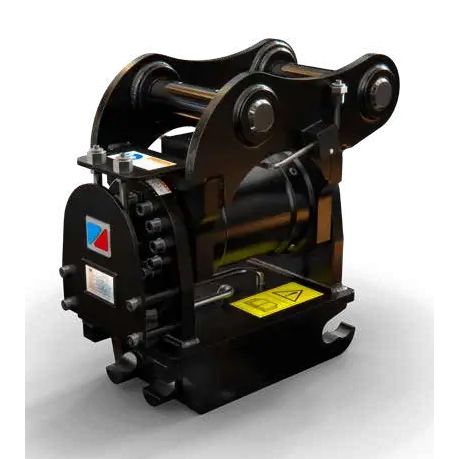
Standard
QC-S - S-System Scandinavian quick-coupler
A rear mechanical safety lock and a pilot-operated check valve hold the attachment, and a visual indicator shows it is engaged. The fully automatic version changes S-system buckets and tools from the cab.
On requestView product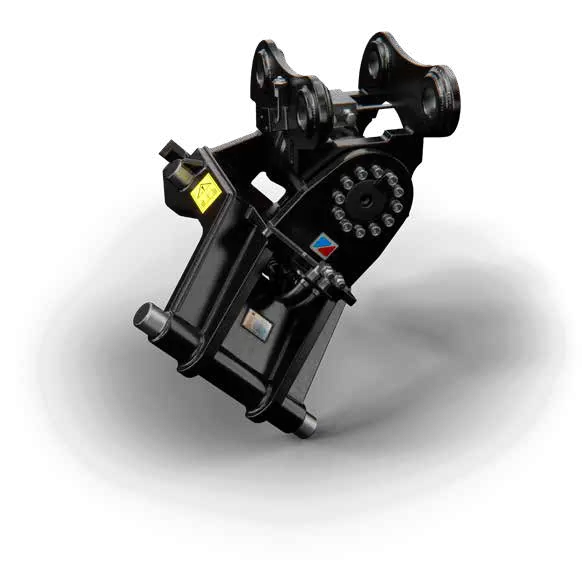
Standard
CW - CW-System compatible quick-coupler
The wedge design keeps breakout force high, and a pilot-operated check valve secures the attachment. It takes CW-system brackets in manual, automatic and tilt/swivel versions.
On requestView product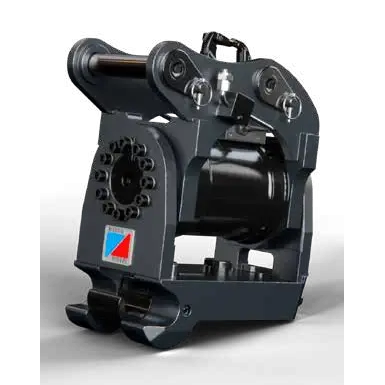
Standard
QC-HS / QC-MS - MS-System compatible quick-coupler
A CNC-machined cast steel body with front and rear mechanical safety locks. It picks up MS and SY system attachments in automatic, mechanical and tilt/swivel versions.
On requestView product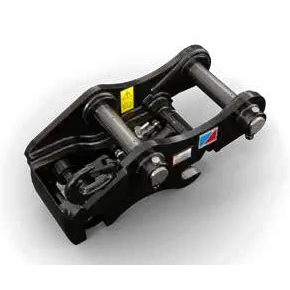
Standard
QC-PG - pin-grabber quick-coupler for factory brackets
The coupler picks up the excavator maker's own bracket, and the variable pin-centre models take many different OEM attachments. Existing buckets are used without new brackets.
On requestView product


How to choose
- 1
Start from the brackets you already own
The coupler has to match the brackets welded on your buckets, not the other way round. Read the system name off one bucket bracket, or send us a photo and the pin dimensions, and we will tell you which family fits before anything is ordered.
- 2
Match the size to the carrier weight
Every coupler family runs in size steps, and each step names the excavator weight band it was drawn for. An undersized coupler can be overloaded and must not be used outside its rated carrier range. One size large adds mass and length you carry all day for nothing.
- 3
Decide mechanical, automatic or tilt and swivel
A mechanical coupler is opened with a wrench and costs least; a fully hydraulic one is opened from the cab and pays back on sites where you change attachment several times an hour; a tilt and swivel version angles the attachment hydraulically through 2 × 90°. It covers many angled jobs without a separate tiltrotator, but it does not rotate continuously through 360°.
- 4
Check what the machine can feed
A hydraulic coupler needs a spare double-acting line and a control in the cab, and a tilt and swivel version needs a second one. If the carrier has only one auxiliary circuit, say so on the quote form and we will propose the version it can run.
- 5
Read the safety features, not just the price
Safety architecture depends on the coupler system; individual family pages specify the mechanical and hydraulic locking features. Before you compare prices, check which locks are listed for the coupler you plan to buy.
Questions we are asked
- Which coupler system should I order?
- Order the one your attachments already use. S system is the Nordic standard, CW is widespread in the Netherlands and Belgium, MS and SY are common in central Europe, and a pin grabber takes the excavator maker's own brackets.
- Can I keep my existing buckets?
- Usually yes. If the buckets carry brackets of the same system and size, they go straight on. If they are direct fit on pins, a pin grabber coupler takes them, or we can fit new brackets to them.
- What does a coupler change on the machine?
- It adds length between the stick and the attachment and it adds mass, so breakout force and lifting capacity drop a little. The dimensions and the mass of every model are printed in the table on each family page.
- Do I need extra hydraulic lines for a tilt and swivel coupler?
- Yes. A tilt and swivel coupler needs its own hydraulic supply beside the line that locks the coupler, so the carrier needs two auxiliary circuits or a valve block that splits one.
- Can one coupler take attachments from different makes?
- A pin grabber with variable pin centres takes several different original brackets, which is the usual answer for a mixed fleet. Tell us the makes and models you run and we will confirm the sizes before you order.
Who builds these
- Designed and built in Ostrołęka, Poland, in our own plant.
- 12 months of warranty on every attachment.
- Scheduled for certification to ISO 9001, ISO 14001 and ISO 45001 with UDT: one integrated management system for the whole company.
Quick-coupler systems compared
One column per coupler family. The figures come from each family's model table, from its smallest to its largest model.
| QC-S - S-System Scandinavian quick-coupler | CW - CW-System compatible quick-coupler | QC-HS / QC-MS - MS-System compatible quick-coupler | QC-PG - pin-grabber quick-coupler for factory brackets | |
|---|---|---|---|---|
| Interface |
|
|
|
|
| Models in the table | 23 | 22 | 15 | 30 |
| Machine class [t] | 0.5–34 | up to 45 | 0.9–28 | 0.9–40 |
| Weight [kg] | 15–772 | 10–1146 | 20–684 | 14–1435 |
| Safety |
|
|
|
|
→ Scroll the table sideways to see the other families.
UK market: semi-automatic couplers are not supplied to the UK. Under an industry agreement with the HSE in force since 1 October 2008, UK buyers get the automatic or the manual version only. Confirm the version with our engineers when you ask for a quote.
Coupler systems at a glance
What each coupler type in our range offers, as our product brochure lists it.
Brackets are also made to order for NTP-10, NTP-20, SMP 105, and SMP 620 interfaces; ask in the quote.
Automatic hydraulic quick-hitches
- Pin-grabber quick-hitches with Variable Pin Centre adhering to EU Machinery Directive: up to 120 mm pin
- CW compatible: CW00 - CW55
- S standard ready: S30 - S90
- MS compatible: MS01 - MS21
- Safety features (double profiled front hook, visual indicator of engagement, rear mechanical pin lock, front mechanical pin lock, hydraulic check valve etc)
- Optional lifting hook
Tilt-motor quick-couplers
- Up to 180 degrees tilt
- All couplers (mechanical & hydraulic) available with tilt motor
- All safety features from standard automatic models
- Low-weight construction
- Hydraulic line routing
- Lifting hook as option
Mini-tilt couplers
- Few-part construction
- Serviceable on site
- 75 degree tilt in total
- Available for excavators of 0.8–3.5 t operating weight
- Direct fit (factory bracket) or a coupler bracket: S-system, CW or MS
- Breakout force retained
Pin-grab quick-couplers: factory brackets pick-up
- Made for factory OEM brackets
- Connect with most brackets with two pins
- Automatic, manual, swiveling/tilting options available
- Safety features (pilot operated check valve)
- Lifting hook option
- In line with the Machinery Directive
Attachments by quick coupler interface
One page per interface in our model tables, with the models that list that bracket.
Quick couplers, photographed in the works
Photographs taken in our own yard and workshop.

A large hydraulic coupler on a pallet in the workshop.

A coupler with both locking pins and their red indicators visible.

The same coupler seen from the machine side.

A coupler photographed from three-quarters, showing both pin bores.

A coupler resting on a timber block before packing.

The hydraulic ram and locking bar on the underside of a coupler.

A coupler seen from above on pallet timbers.

A coupler mounted on a machine, with the safety clips in place.

A coupler with its open hooks facing the camera, on a green stand in the works.

A hydraulic coupler on a pallet, its blue ram visible between the side plates.

A coupler with both pins and a lifting eye, on a pallet in the hall.

A coupler on a pallet, with its locking lever and pin bores.

A coupler on paving, with red-capped locking pins and a lifting eye.

A tilting coupler standing upright, its tilt motor facing the camera.

A tilting coupler on a pallet, seen from the front, with its warning labels.

A tilting coupler in the workshop, seen from three-quarters.

A close view of the tilt motor and its bolted flange.

Two tilting couplers side by side on the workshop floor.