
Disc cutters that score a straight line through asphalt before break-out: the AC for 12 to 30 t, the AC mini.
The whole range: Excavator tools
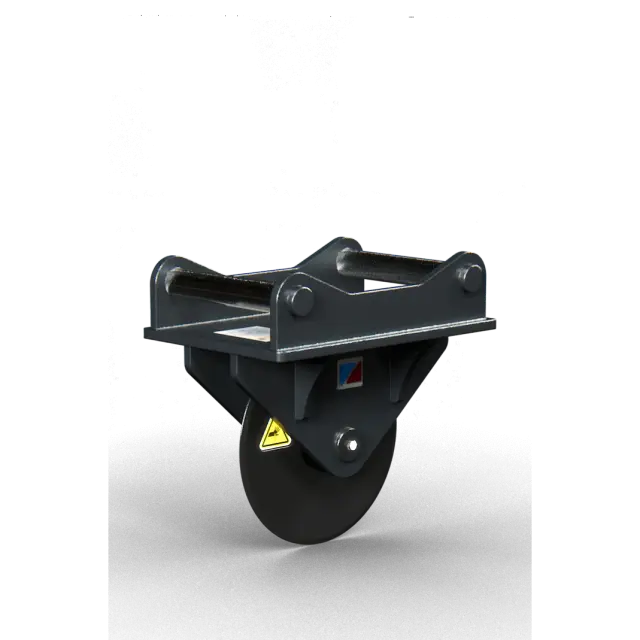
Standard
AC - Excavator asphalt cutters
A 450 mm steel disc, symmetrical (ACs) or asymmetrical (ACa). It makes clean cuts in asphalt for road repairs, utility trenches and pavement and kerb work.
Fits your machine
- We usually reply within 1 working day
- We check the fit before we send the quote
- Every offer names the dispatch week

Standard
AC mini - asphalt cutter for mini-excavator
Asphalt cutter for mini-excavators. The 450 mm steel disc cuts asphalt for roadworks, repairs and utility trenches.
Fits your machine


How to choose
An asphalt cutter scores a straight line through a surface before the surface is broken out. The disc runs on the excavator boom, so the machine that is already standing on the job makes the cut and nobody walks a saw along the trench line. The clean edge is what makes the reinstatement easy. The material outside the line stays bonded, the break-out follows the cut instead of tearing sideways, and the patch that goes back in has a straight joint to seal. Two tools cover the work. The AC is the excavator cutter for 12 to 30 t machines: a 450 mm steel disc on a bearing assembly, 150 mm of cutting depth, and an adjustable depth setting so the cut can be taken shallower. It is built in two sizes, the AC-18 at 99 kg for 12 to 18 t carriers and the AC-30 at 165 kg for 19 to 30 t carriers. The AC mini is the same idea on a mini excavator, for road repairs and short utility trenches. Both come with a symmetrical or an asymmetrical disc.
- 1
Start with the carrier
The AC covers excavators from 12 to 30 t, as the AC-18 for 12 to 18 t and the AC-30 for 19 to 30 t. Below that class the AC mini is the tool that fits a mini excavator without overloading the stick.
- 2
Check the depth you actually cut
The AC cuts 150 mm deep and the depth is adjustable, so a wearing course can be scored without going through the base. Match the setting to the layer you intend to break out rather than cutting the maximum every time.
- 3
Symmetrical or asymmetrical disc
A symmetrical disc sits centred and is the normal choice in open pavement. An asymmetrical disc puts the cutting plane to one side, which is what you want when the line runs tight against a kerb, a wall or an existing edge.
- 4
Plan the cut before the break-out
Run the cutter along both sides of the trench first, then break out between the lines. The reinstatement then seals against a straight edge and the surface around it is not disturbed.
Questions we are asked
- What does it cut?
- Asphalt and thin concrete. The disc scores a clean line through the surface before break-out, which is what road repairs, utility trenches, pavements and kerb work start with.
- How deep does it go?
- The AC cuts 150 mm with a 450 mm disc, and the depth is adjustable, so you can take a shallower pass through a wearing course and leave the layers under it untouched.
- Why cut at all before breaking out?
- Because a torn edge does not seal. A scored line keeps the material outside it bonded, holds the break-out inside the trench line, and leaves a straight joint for the patch.
- Can it work tight against a kerb?
- That is what the asymmetrical disc is for. It moves the cutting plane off the centre line, so the cut can be taken along a kerb or a wall instead of a hand saw doing that part of the job.
Who builds these
- Designed and built in Ostrołęka, Poland, in our own factory.