
Catalogue
Heavy excavator attachments
Attachments for heavy excavators above 30 t, for large earthworks and quarry work. Tell us the machine and its quick coupler and we confirm the fit before production. Heavier machines on request: for the 50–80 t class we build custom attachments up to 8 t per piece, per machine.
Buckets, couplers and tools for excavators of 30 t and more, with the steel and wear package chosen up front.
Full-size excavator attachments
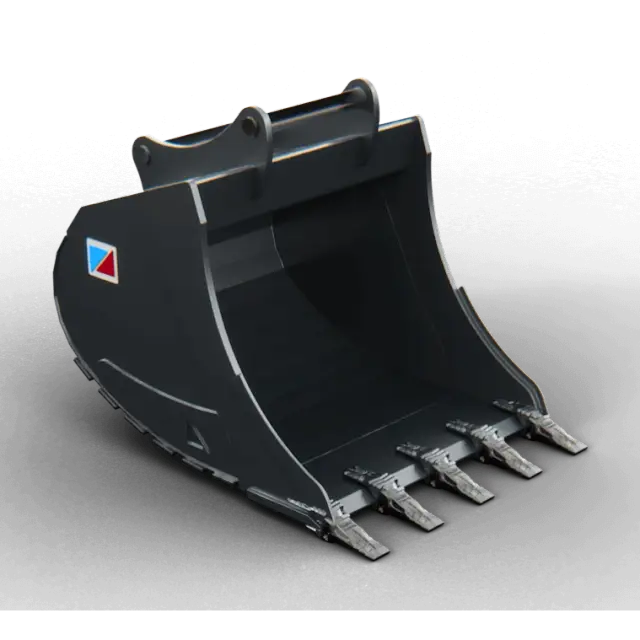
DBF Flat-top digging bucket for quick coupler
The flat top suits excavators that change attachments on a quick coupler. It comes in Economy, Standard, Heavy Duty and Rock versions.
- Weight Class
- 30–65 t
Attachments for heavy excavators above 30 t, for large earthworks and quarry work. Tell us the machine and its quick coupler and we confirm the fit before production. Heavier machines on request: for the 50–80 t class we build custom attachments up to 8 t per piece, per machine.
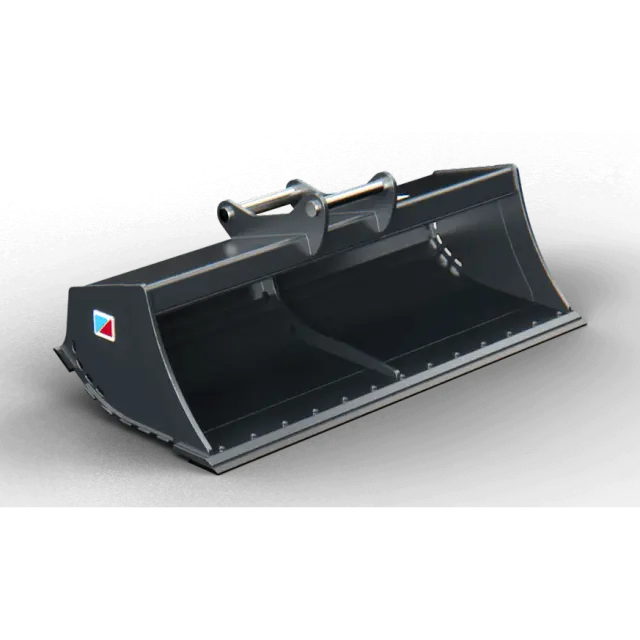
GD Rigid grading & ditching bucket, 12–40 t
The rigid body has no tilt joint, so there are no hoses or cylinders to connect. It is used to grade surfaces and clean ditches.
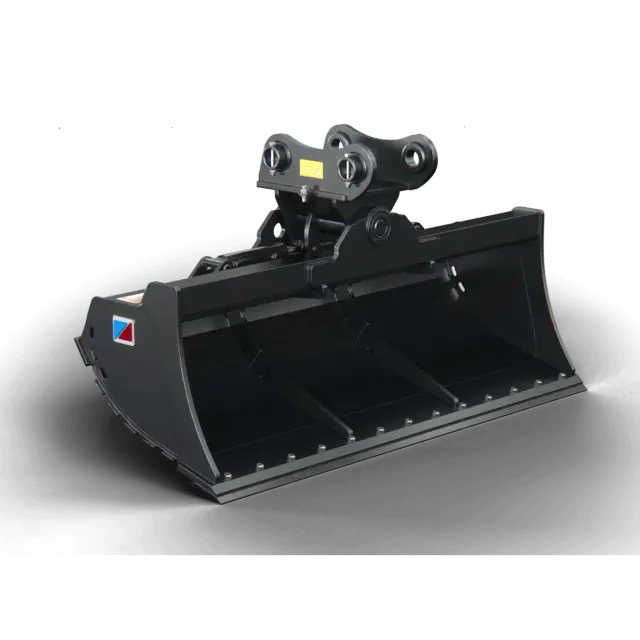
GDH Heavy duty hydraulic grading & ditching bucket
The hydraulic tilt grading bucket shapes slopes and levels uneven ground.


Digging & sorting buckets
Digging and sorting buckets for excavators in several capacities, for digging and material handling.
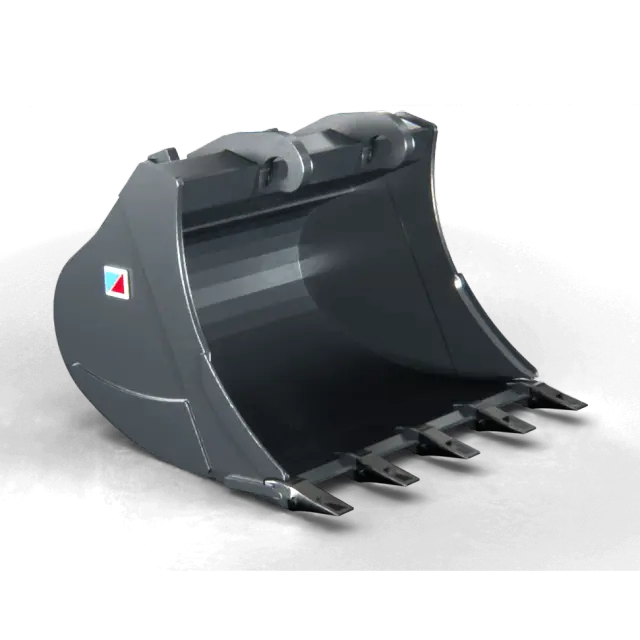
StandardEarthmoving / heavy duty
DB Heavy duty digging bucket
A digging bucket for most materials, with a rock version for harder ground.
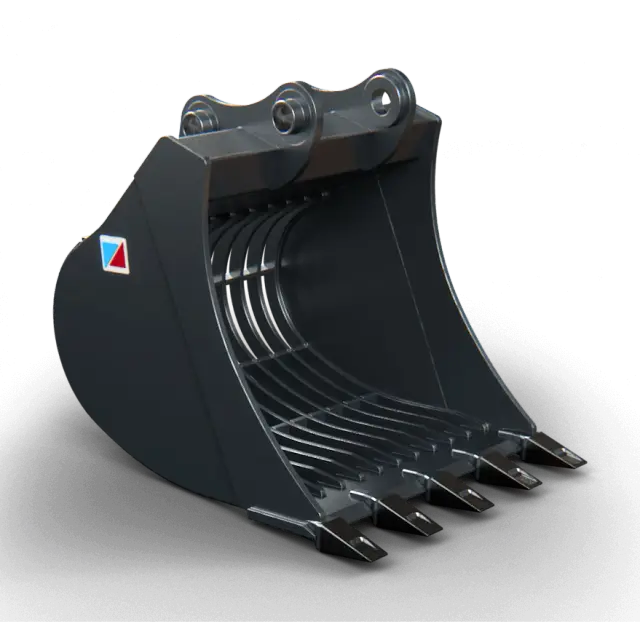
SDB Heavy duty skeleton DB bucket
The SDB separates material as you dig: soil falls through the ribs while stone, rubble and roots stay in the bucket.
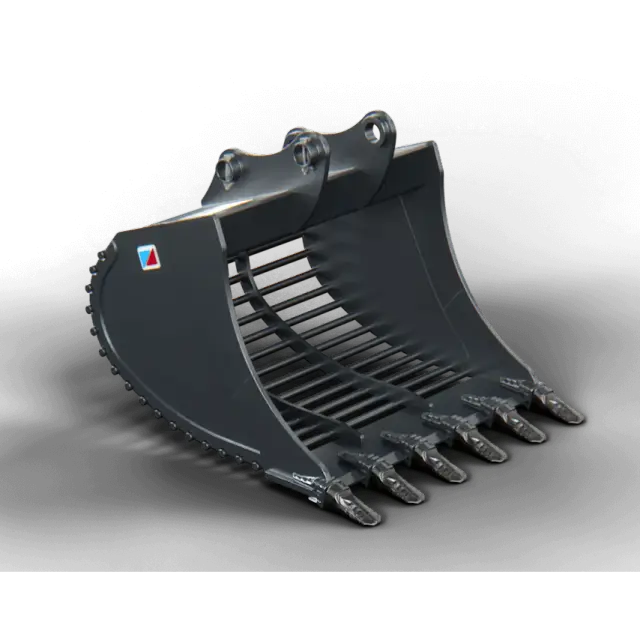
RDBF Flat-top skeleton DBF bucket on rods
Interlocking steel rods replace the solid bottom, C45 as standard and Hardox® as an option. Soil sifts out from the rocks while you dig trenches, drains and pipe bedding.
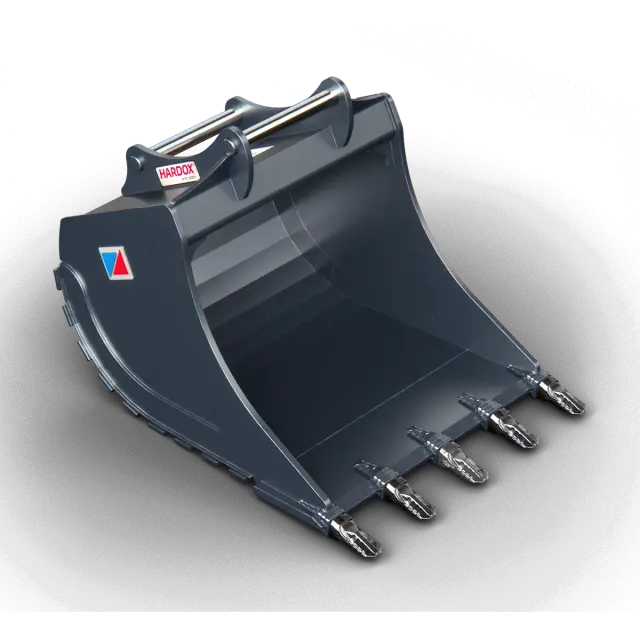
DSX Nordic heavy duty digging bucket
Nordic profile heavy duty digging bucket for excavators from 14 to 40 t, made of Hardox® 450 for rocky ground.


Ditching, grading, sloping buckets
Buckets for ditch cleaning, grading and sloping.
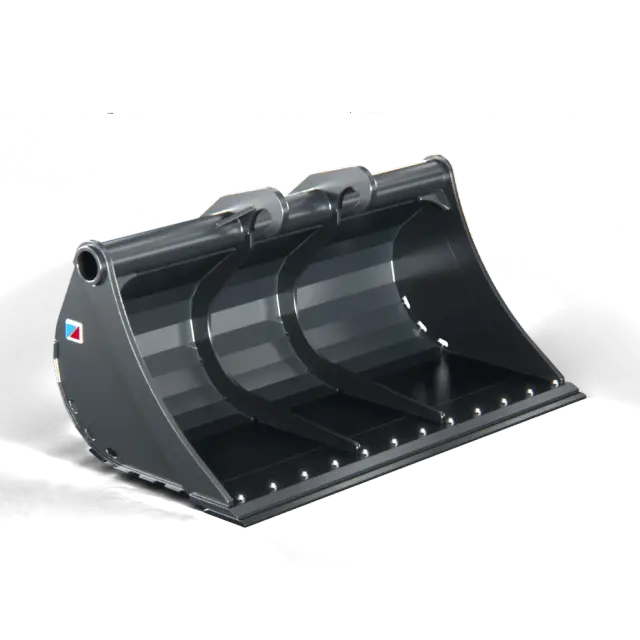
SB Dutch profile grading & ditching bucket
The Dutch profile has a wider opening, so sticky soil falls out. Use it for grading and ditch work in sticky soil.
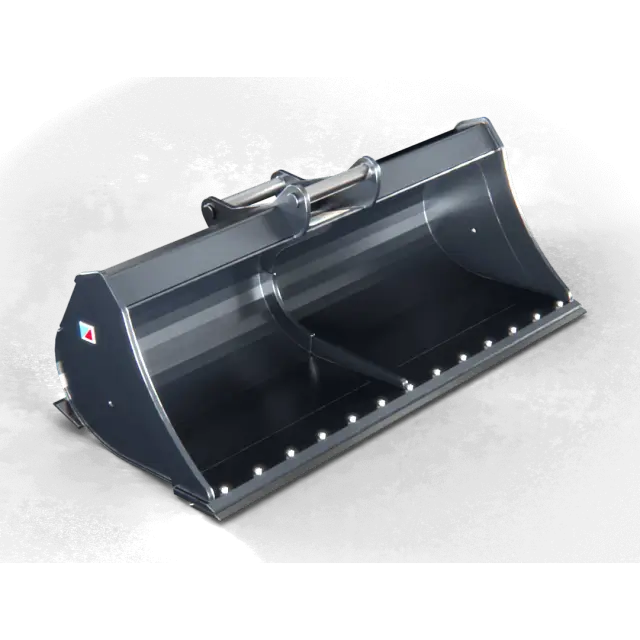
DCB Grading & ditching bucket with round profile
The round profile lets material flow out with little drag. Use it to grade surfaces and to dig and clean ditches.


Non-bucket attachments
Attachments other than buckets: grading beams for finishing, single rippers and multi-rippers for hard ground, and asphalt cutters for removing pavement.
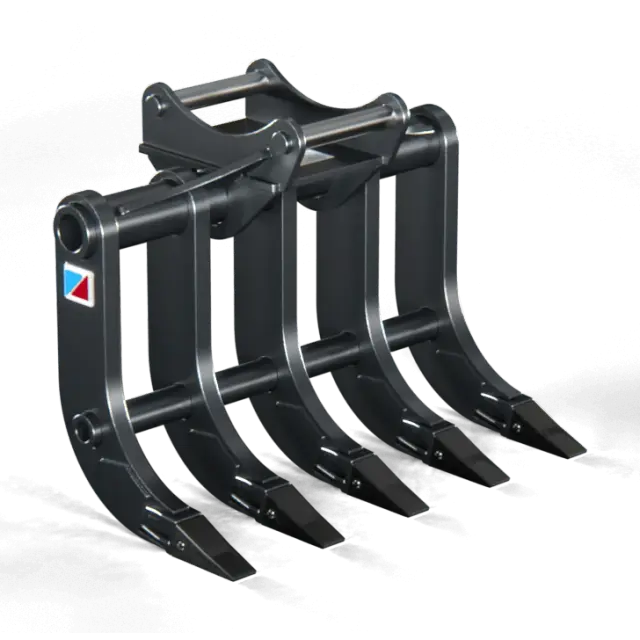
MR Heavy duty excavator multi-ripper
The MR multi-ripper enters the ground on several legs at once and breaks up and loosens compacted material.
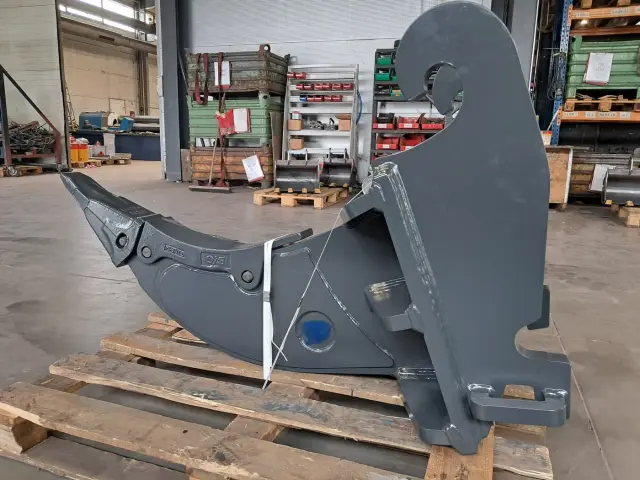
RIP Heavy duty ripper
A single shank made of high-strength steel, with a protector over the shank. It breaks up hard soil, rock and frozen ground, so the material can then be loaded with an ordinary digging bucket.


Sizes for 30–65 t machines
| Family | Sizes | Width | Capacity |
|---|---|---|---|
| DB - heavy duty digging bucket | 10 | 1,000–1,800 mm | 1,082–2,755 l |
| DBF - flat-top digging bucket for quick coupler | 10 | 1,000–1,800 mm | 1,024–2,611 l |
| DCB - grading & ditching bucket with round profile | 3 | 2,000–2,600 mm | 1,307–1,735 l |
| DSX - Nordic heavy duty digging bucket | 3 | 1,000–1,400 mm | 921–1,462 l |
| GD - rigid grading & ditching bucket, 12–40 t | 3 | 2,000–2,600 mm | 1,395–1,851 l |
| GDH - heavy duty hydraulic grading & ditching bucket | 3 | 2,000–2,600 mm | 1,336–1,780 l |
| RDBF - flat-top skeleton DBF bucket on rods | 6 | 1,500–2,000 mm | 1,727–2,999 l |
| SB - Dutch profile grading & ditching bucket | 4 | 2,000–2,500 mm | 1,739–2,242 l |
| SDB - heavy duty skeleton DB bucket | 4 | 1,600–2,000 mm | 1,917–3,000 l |
| MR - heavy duty excavator multi-ripper | 1 | 1,300 mm | – |
| RIP - heavy duty ripper | 2 | – | – |
Counted from the catalogue sizes rated for 30–65 t machines. The family page lists every size.
Machine makes in the 30–65 t class
Pick your make to see its models in this class, with the operating weight the manufacturer publishes.
- Atlas1 model
- CASE6 models
- Caterpillar12 models
- Develon15 models
- Hidromek10 models
- Hitachi21 models
- Hyundai11 models
- JCB3 models
- Kobelco19 models
- Komatsu47 models
- Liebherr34 models
- LiuGong2 models
- Sany6 models
- Volvo31 models
- XCMG3 models
Machine makes and model names belong to their owners. Sieruta is not affiliated with them. We use the names only to show which machines we offer attachments for, by operating weight.
How to choose
Above 30 tonnes the attachment is part of the machine's production rate. Everything about it has to be decided before the first cut: the steel, the wear package, the bracket and the way it will be repaired on site three years from now. This page lists every Sieruta family with at least one model row rated for a carrier of 30 tonnes or more: heavy-duty digging buckets, flat-top buckets drawn for a quick coupler, the Nordic heavy-duty profile, rigid and hydraulic grading and ditching buckets, the round profile ditching bucket, the Dutch profile bucket, riddle buckets both solid-sided and on rods, the heavy-duty ripper and the multi-ripper. The tables reach 50 tonnes on the bucket families and 65 tonnes on the ripper. Each family page states its own steel grades, and the bracket is built to the coupler on your machine. Send the carrier data with the model code and we confirm capacity, wear package and bracket in writing before production starts. For digging, the DB is the bucket for soil, trenches, foundations and bulk material, built as Economy, Standard or Heavy Duty in the sizes of its model table. When the ground is rock, choose its sibling, the DBS rock bucket. It is engineered to order: we design it for one machine and the rock it digs, and the teeth, adapters, side cutters and wear protection are chosen for that rock. Tell us the rock and the machine, and our engineers design the bucket around them.
- 1
Start from the material, then the capacity
At this size the material sets the bucket size. Rock and wet clay call for a smaller bucket than the machine could carry, because a full bucket the machine cannot lift cleanly costs time on every cycle. Tell us density and digging depth and we size it from there.
- 2
Decide the wear package first: it drives the price and the life
Cutting edge, side protectors, wear bars, heel shrouds and the tooth system decide how many hours the bucket runs before it goes on the bench. Abrasive ground needs a heavier package than the same width in soil, and adding protection after the first season costs more than ordering it fitted.
- 3
Match the profile to the work the machine repeats
A digging bucket moves volume, the Nordic profile suits hard digging, a rigid grading bucket cleans and levels, a hydraulic one shapes a slope from one position, a riddle bucket sorts stone from soil, a ripper opens ground no bucket will enter. Name the repeated job and the profile follows.
- 4
Confirm the coupler system and the load it has to carry
Above 30 tonnes the bracket is a structural part. Give us the system on the machine, for example S60, S80 or a pin-on fit with its pin diameter and centres, and we build the bracket to it so nothing sits in the load path that does not belong there.
- 5
Ask how it will be repaired before you order it
Wear parts on a heavy bucket are replaced several times in its life. We build with bolt-on edges and replaceable protectors where the family allows it, so a worn part comes off on site instead of the whole tool going back to a workshop.
Questions we are asked
- Which carriers count as heavy here?
Machines of 30 tonnes and above. A family appears on this page when at least one model row of its table is rated for a carrier in that range.
- How large do the tables actually go?
The bucket families run to 50 tonnes and the heavy-duty ripper to 65 tonnes. The exact range per model is in each family's table, read off the catalogue.
- Can you build a size that is not in the table?
Yes. The families in the table are built in series, and for the largest attachments we also build to your dimensions: send them or a drawing with the carrier data and we come back with a proposal and a price.
- Which tooth systems can I have?
Each family states the systems it supports and the number of teeth per width in its model table. Tell us what the rest of the fleet runs and we keep it on one system.
- What do you need from me to quote?
The machine make and model, its operating weight, the coupler system, the material you dig and the widths you want. With that we can confirm the fit and price the wear package.
Who builds these
- Designed and built in Ostrołęka, Poland, in our own factory.