
Application
Utility
Buckets, rippers and tools for utility and municipal work.

Families
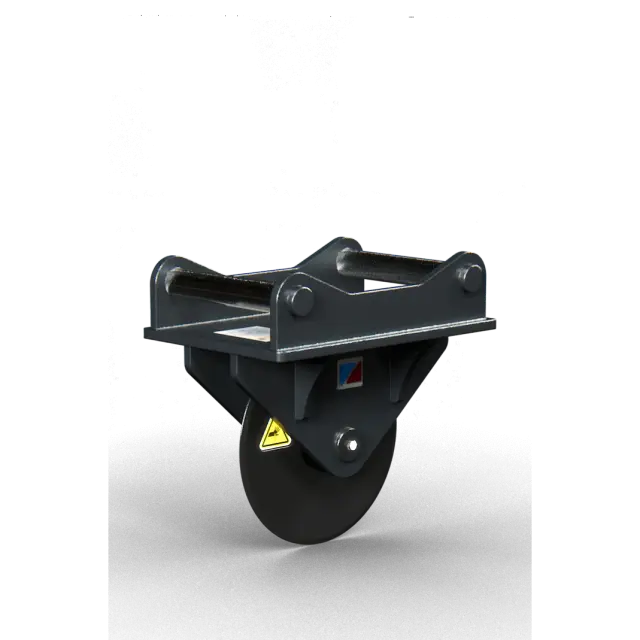
AC Excavator asphalt cutters
A 450 mm steel disc, symmetrical (ACs) or asymmetrical (ACa). It makes clean cuts in asphalt for road repairs, utility trenches and pavement and kerb work.

AC mini - asphalt cutter for mini-excavator
Asphalt cutter for mini-excavators. The 450 mm steel disc cuts asphalt for roadworks, repairs and utility trenches.
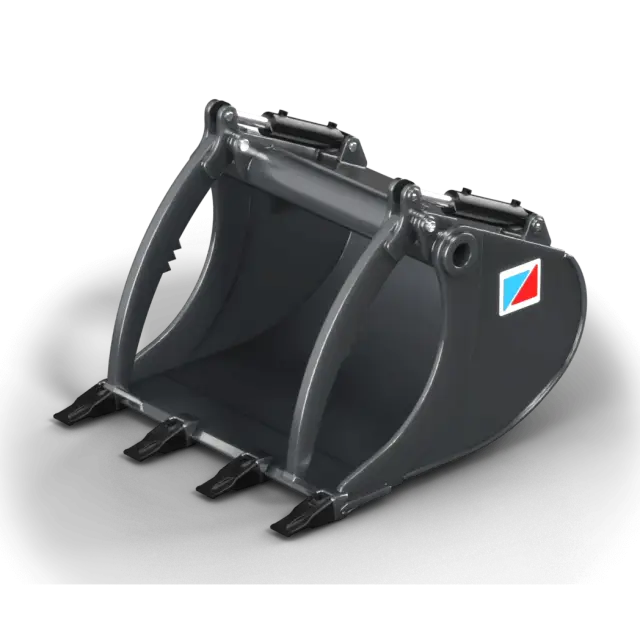
CB mini - hydraulic clamp bucket for mini-excavator
The hydraulic clamp bucket lets an excavator dig, then its clamp grips material for handling and sorting.
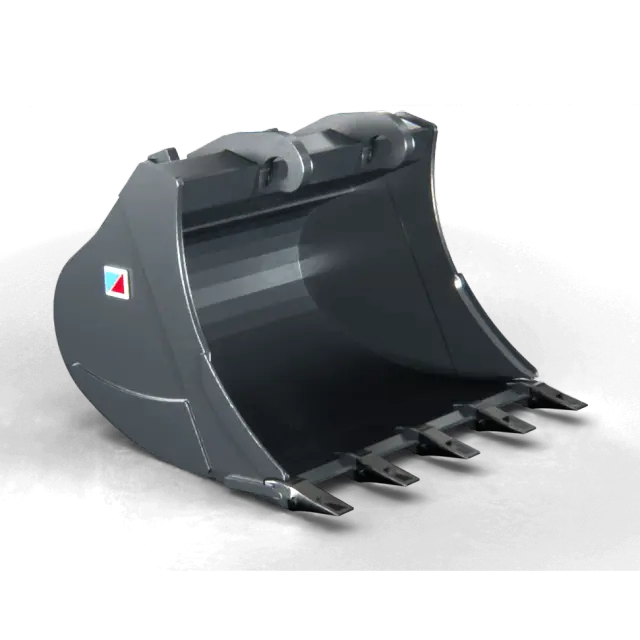
StandardEarthmoving / heavy duty
DB Heavy duty digging bucket
A digging bucket for most materials, with a rock version for harder ground.
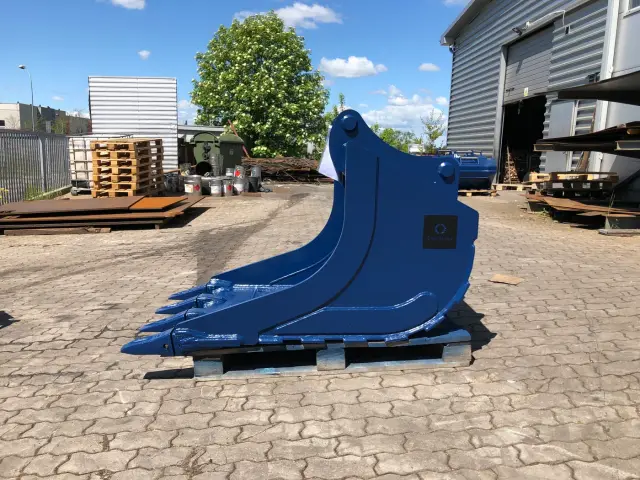
DS mini - Scandinavian deep digging bucket for mini-excavator
Deep digging bucket in the Nordic profile for mini-excavators, for rocky ground and abrasive material.
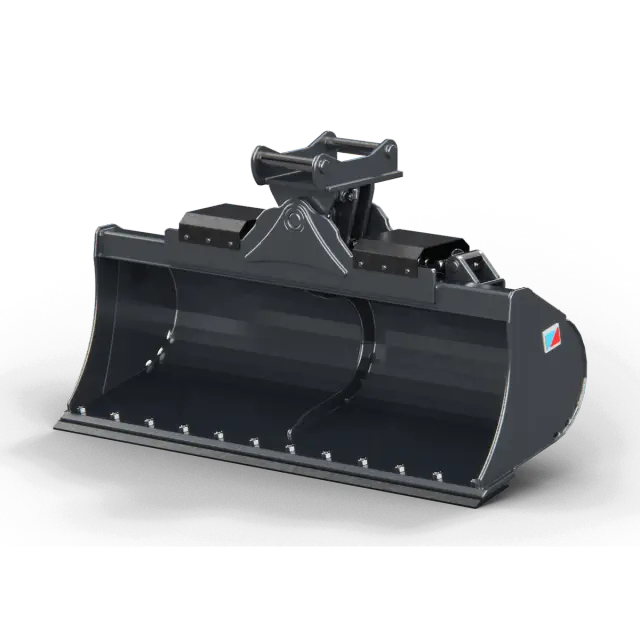
GBPH Hydraulic tilting grading & ditching bucket
Tilts 45 degrees to each side, and a double pilot check valve holds the angle. Ditches, slopes and banks are cleaned and shaped without moving the mini-excavator.
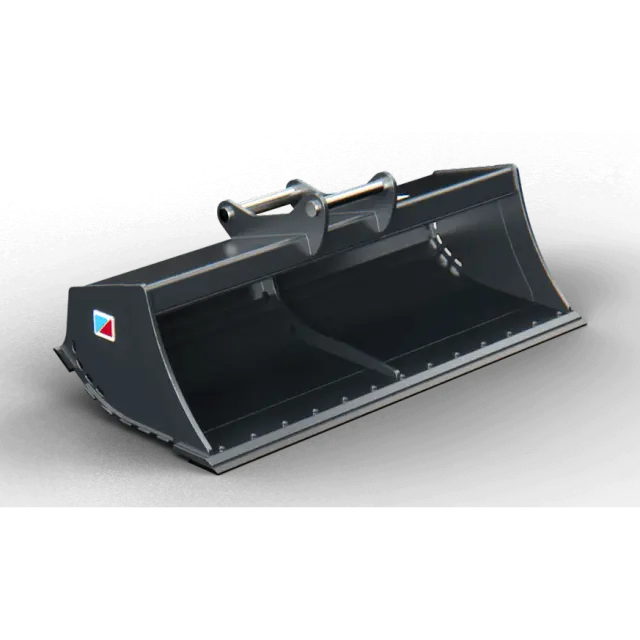
GD Rigid grading & ditching bucket, 12–40 t
The rigid body has no tilt joint, so there are no hoses or cylinders to connect. It is used to grade surfaces and clean ditches.
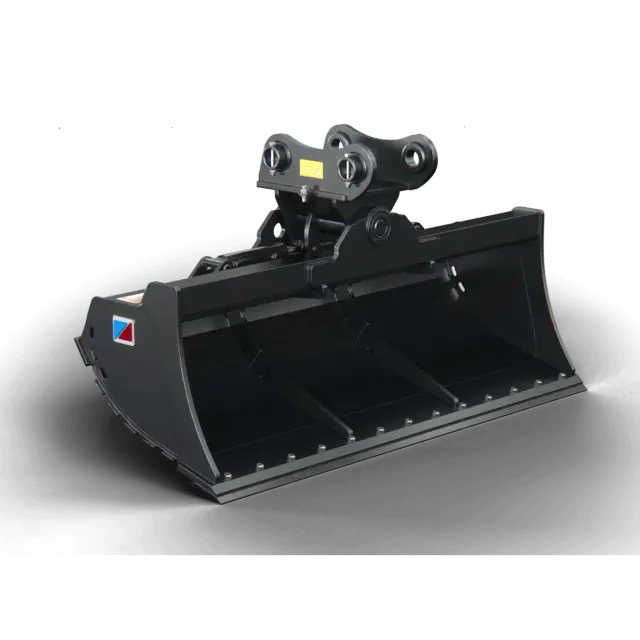
GDH Heavy duty hydraulic grading & ditching bucket
The hydraulic tilt grading bucket shapes slopes and levels uneven ground.
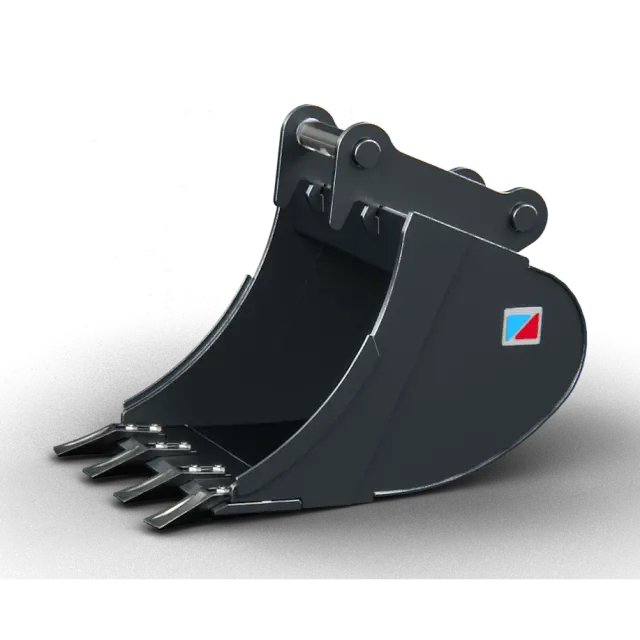
GP General purpose digging bucket
A digging bucket for everyday excavation in earth, gravel, and loose materials. It is used for trenching, foundation work, and landscaping.
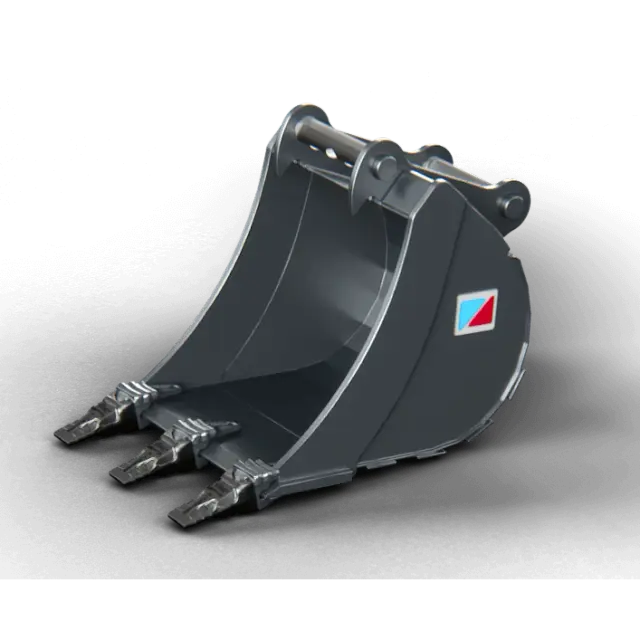
GPL General purpose digging bucket
A bucket for digging common materials like earth, gravel, and loose soil. It is used for trenching, foundation work, and landscaping.
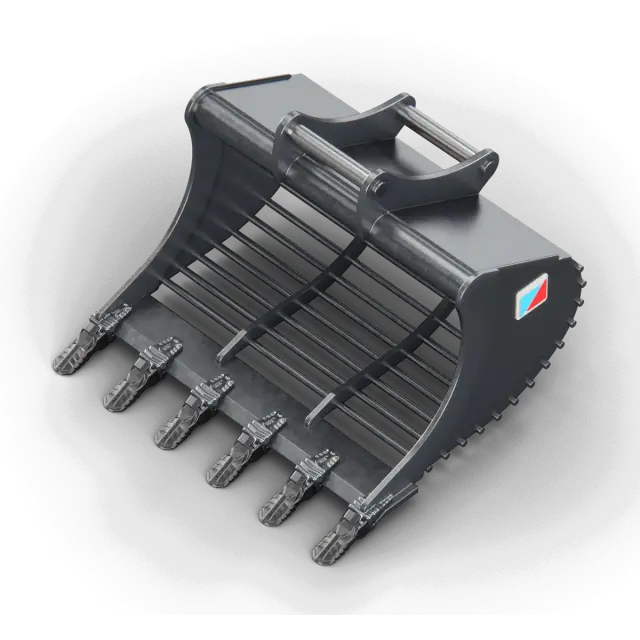
RGPR Skeleton rod bucket
In the RGPR a bottom of C45 steel rods lets soil and water fall through, while stones, roots and rubble stay in the bucket. Material is sorted as it is dug.
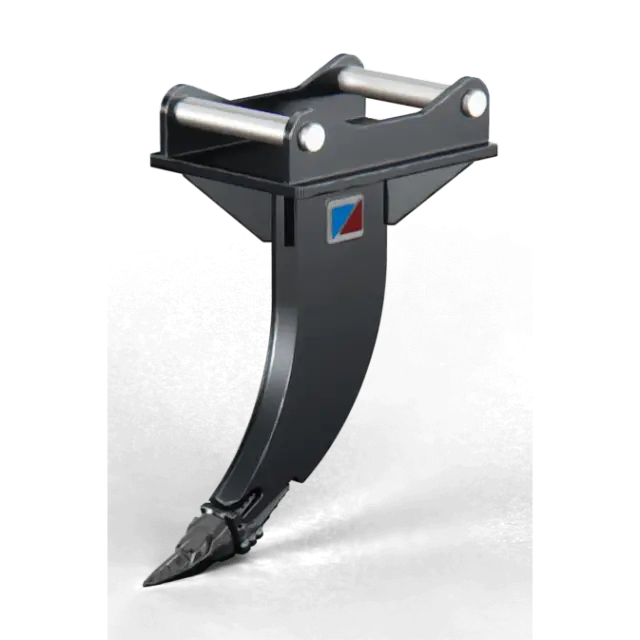
RIP mini - ripper shank for mini-excavator
Mini-excavator rippers break up hard ground before trenching and foundation work.
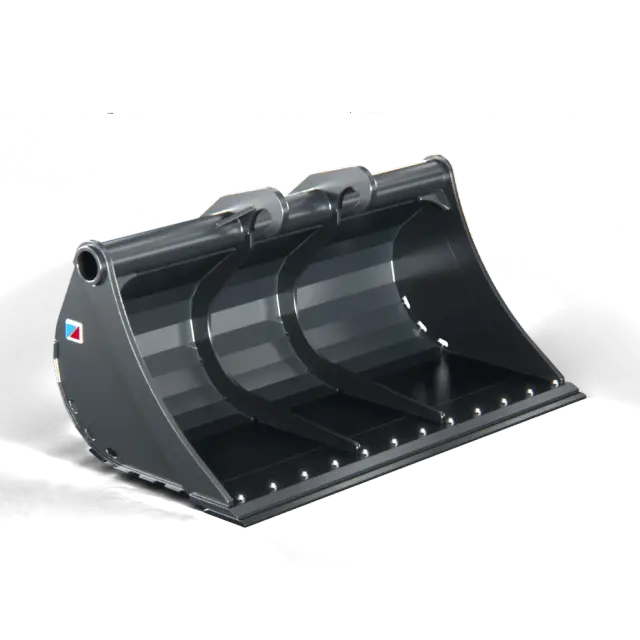
SB Dutch profile grading & ditching bucket
The Dutch profile has a wider opening, so sticky soil falls out. Use it for grading and ditch work in sticky soil.
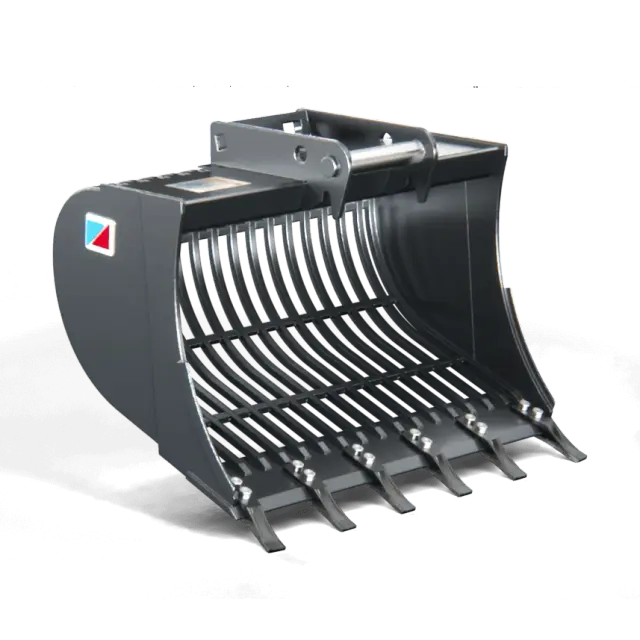
SGP Heavy duty skeleton GP bucket
Built on the GP bucket, with a bottom of S355 steel ribs instead of a closed plate. Fine soil and water fall through, and stones, roots and rubble stay in the bucket.
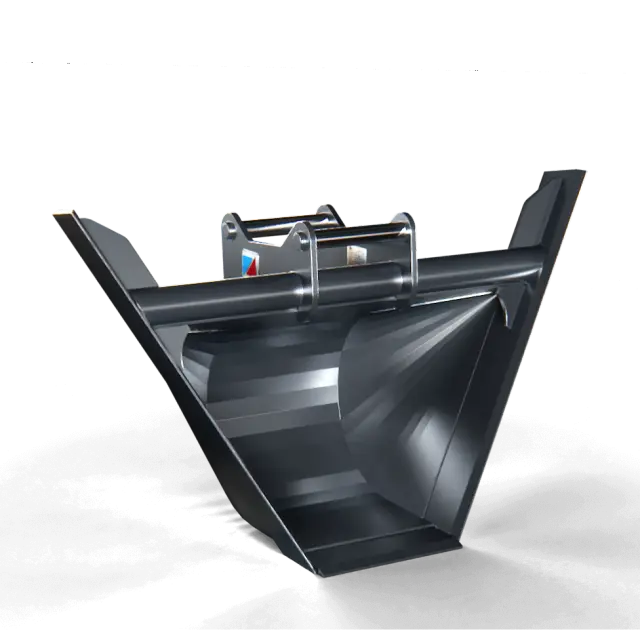
TR Trapezoid profile digging bucket
The sloped side walls form the ditch section in a single pass, so drainage channels and utility ditches need no follow-up trimming.
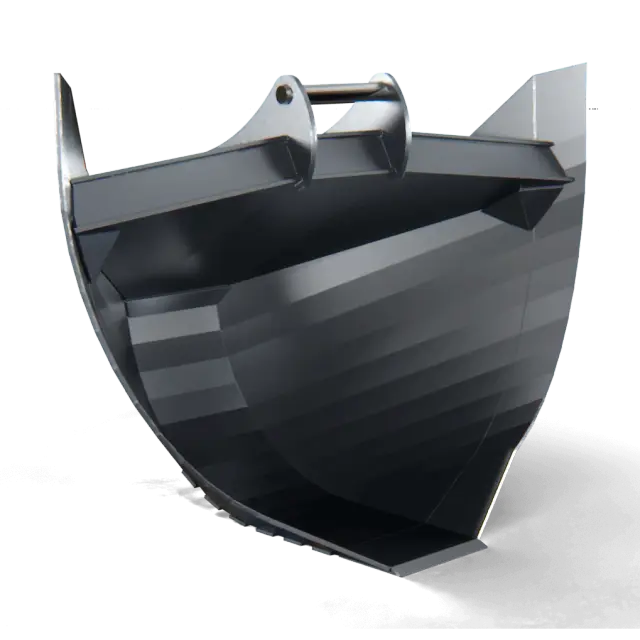
UB U-shape digging bucket
The bucket cuts a U-shaped trench bottom to profile in one pass. Pipe laying and utility work need less backfilling, less handwork and less spoil hauled away.


How to choose
Work through these questions in order, from the surface you open to the machine that carries the tool.
- 1
Is the run under asphalt or paving?
Cut the surface first, so the reinstatement joins a straight edge. The AC asphalt cutter runs a 450 mm steel disc and cuts 150 mm deep, and the depth is adjustable to the thickness of the asphalt layer. It also cuts pavements and kerbs. The disc comes symmetrical (ACs) or asymmetrical (ACa). The AC mini does the same job from a mini excavator and also scores thin concrete.
- 2
Will a bucket get into the ground?
Frozen soil, compacted clay, stony fill and thin concrete stop a bucket. The RIP mini opens them first. Its narrow profile keeps the point in view when you rip beside a kerb, a pipe run or a wall. The tip is replaceable, so you change only the tip when it wears, and you can fit one to suit the material.
- 3
What goes in the trench?
For water and sewer pipes, gas and electrical lines, the UB cuts a U-shaped bottom in one pass, so there is less backfilling, less handwork and less spoil to haul away. For drainage and utility trenches with sloped walls, the TR cuts the ditch section in one pass. For a deep trench for pipes, cables or drainage on a mini or midi excavator, the DS mini has a longer bottom and a larger tip radius, so it cuts deeper in one pass. In loose earth, sand, gravel and firm clay, the GP and GPL general purpose buckets dig trenches for pipes and cables.
- 4
Is there a ditch to dig or clean along the line?
The GD rigid grading and ditching bucket digs drainage ditches and levels the ground beside them. To set the bucket angle without moving the machine, the GDH tilts ±45° and the GBPH up to 45 degrees to each side, and on both a double pilot check valve holds the angle. For sticky clay, the SB has a Dutch profile with a wider opening, so the soil releases from the bucket when you clean a ditch.
- 5
What do you lift and what do you put back?
The CB mini digs, and its clamp picks up a pipe, a kerbstone or demolition waste. A double pilot check valve holds the load if hydraulic pressure drops. If stony spoil goes back in, a riddle bucket sorts it on site. The SGP has S355 steel ribs in the bottom and the RGPR has C45 steel rods 52 to 62 mm apart. Soil and water fall through, and stones, roots and rubble stay in the bucket.
- 6
Which machine carries it?
Match the tool to the machine. On mini and midi excavators: GP-10 to GP-95, GPL-10 to GPL-95 and DS-20 to DS-90 from 0.6 to 10 t, SGP-20 to SGP-95, RGPR-20 to RGPR-95 and GBPH-20 to GBPH-95 from 1.2 to 10 t. The RIP mini, the CB mini and the AC mini are built for mini excavators. On excavators: AC-18 from 12 to 18 t and AC-30 from 19 to 30 t, GDH-120 to GDH-400 from 10 to 40 t, GD-160 to GD-400 and SB-160 to SB-400 from 12 to 40 t, DB-120 to DB-500 from 10 to 50 t. Ask us for the UB and TR that fit your machine.
Attachments by job
Utility work is mostly a trench in a street: open it, dig it to shape, put it back.
A trench for a pipe or utility line
The UB digs the U-shaped profile in one pass, so less spoil has to be hauled away.
A paved street or pavement
Cut the asphalt first with an asphalt cutter, so the reinstatement has a straight edge.
Kerbstones, roots and pipes in the way
The CB mini digs and then clamps, so one tool loads soil and picks up a kerbstone, a root or a pipe.
Ground a bucket cannot enter
The RIP mini opens frozen ground, compacted clay and stony fill, and its narrow profile keeps the point in view beside a kerb or a pipe run.
Stony soil to sort
A riddle bucket lets soil and water fall through and keeps stones, roots and rubble. SGP or RGPR on a mini or midi excavator.
Need a price for Utility attachments?
Tell us the machine and the attachment you need. We usually reply within 1 working day.