
Application
Landscaping
Grading, ditch cleaning and screening buckets for shaping ground.
Recommended for this job
Each family here names this work in its own description and is a tool type the job calls for.
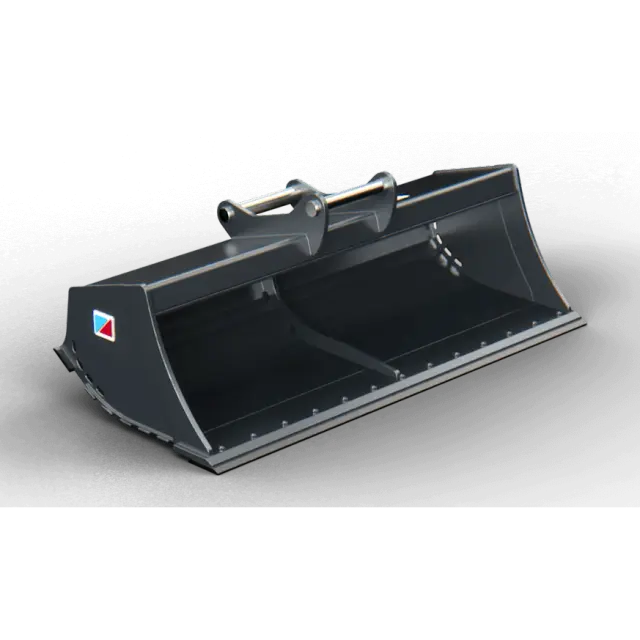
GD Rigid grading & ditching bucket, 12–40 t
The rigid body has no tilt joint, so there are no hoses or cylinders to connect. It is used to grade surfaces and clean ditches.
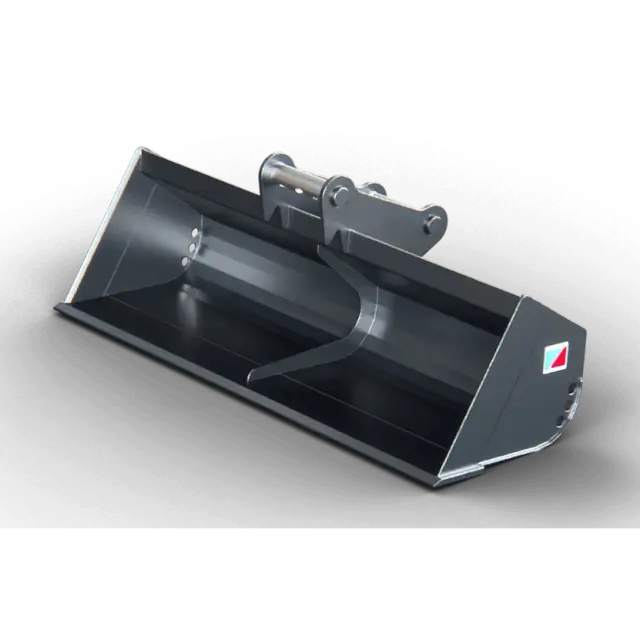
GB Rigid grading & ditching bucket, German profile
Rigid grading & ditching bucket with a flat top. It is used for ditch cleaning, grading and slope work.
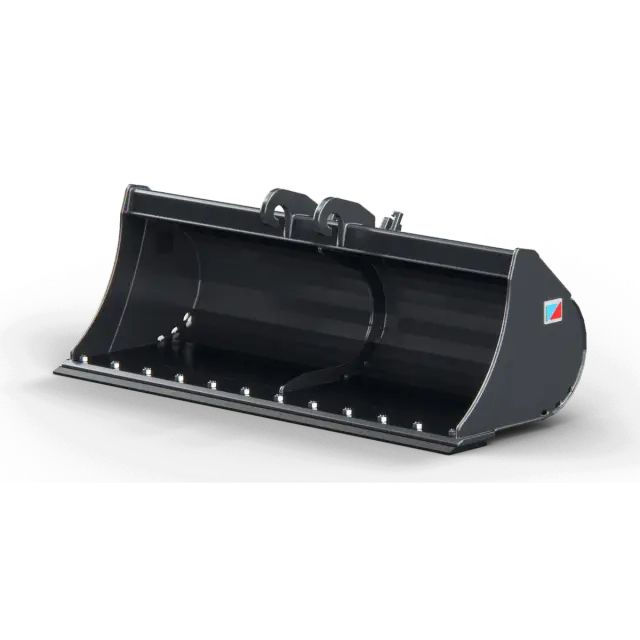
GBP Rigid grading & ditching bucket, Italian profile
A rigid grading and ditching bucket with a round inner profile and an HB500 cutting edge. It cleans ditches, grades and cuts slopes on mini and midi excavators.
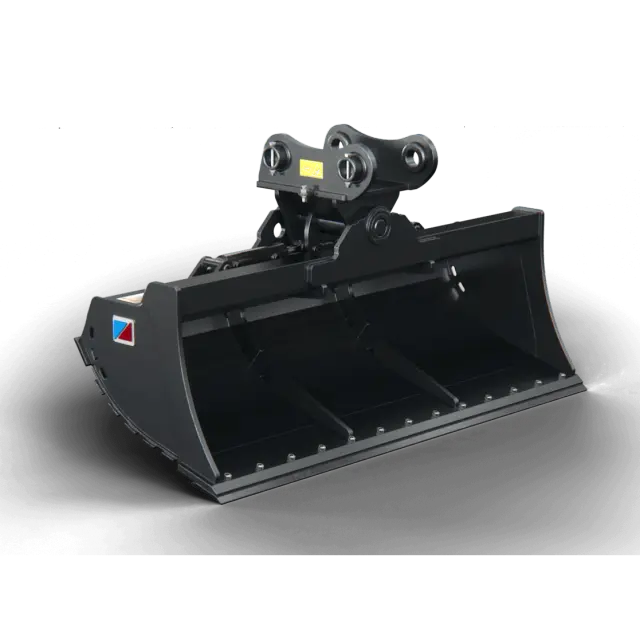
GDH Heavy duty hydraulic grading & ditching bucket
The hydraulic tilt grading bucket shapes slopes and levels uneven ground.
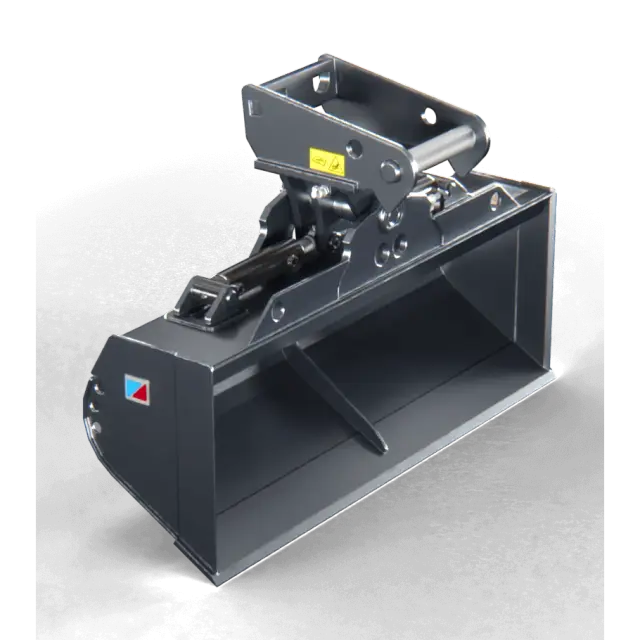
GBH Hydraulic tilt ditching bucket for mini-excavator
Tilts up to 45 degrees to each side, and double pilot check valves hold the angle. Slopes, ditches and banks are shaped without moving the machine.
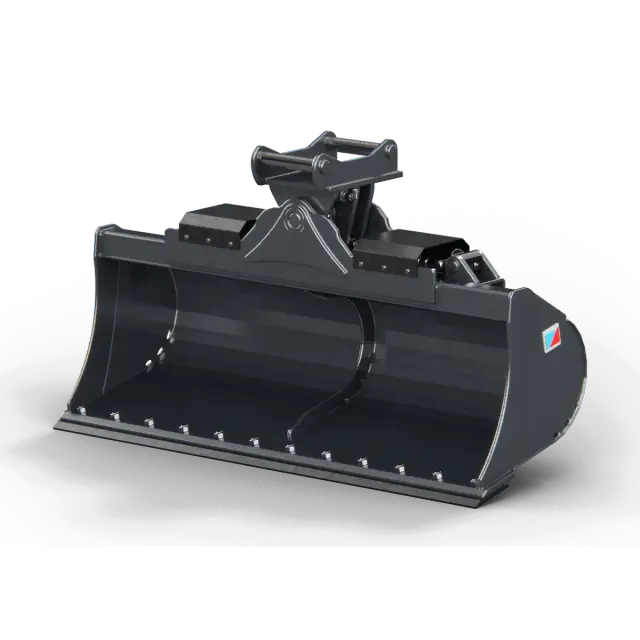
GBPH Hydraulic tilting grading & ditching bucket
Tilts 45 degrees to each side, and a double pilot check valve holds the angle. Ditches, slopes and banks are cleaned and shaped without moving the mini-excavator.
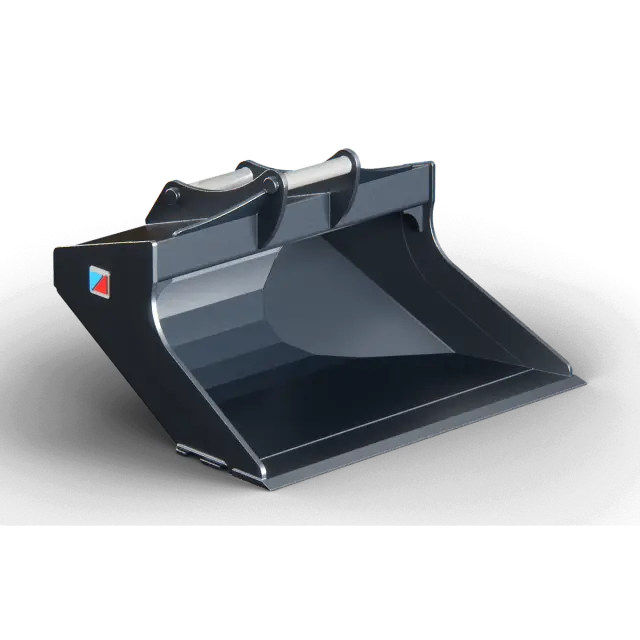
PS Scandinavian universal / grading bucket
A Scandinavian grading profile, used for grading and levelling.
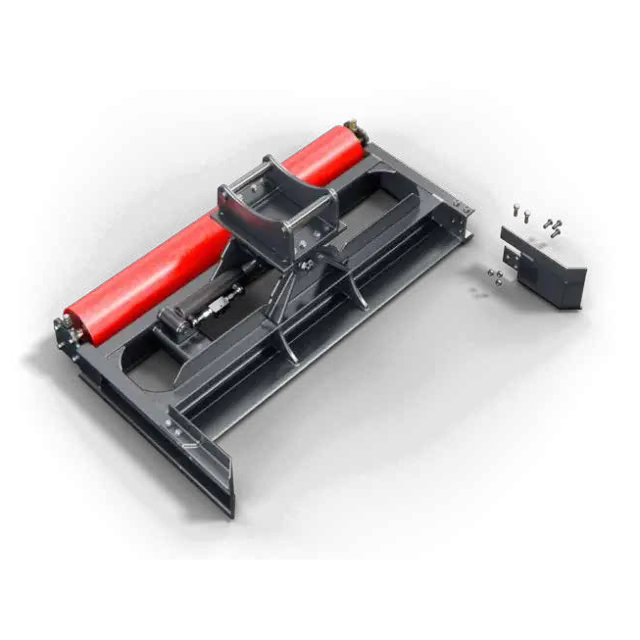
GRB Excavator grading beam
A grading beam for excavators up to 30 t. It levels large areas for driveways, roads and building sites.
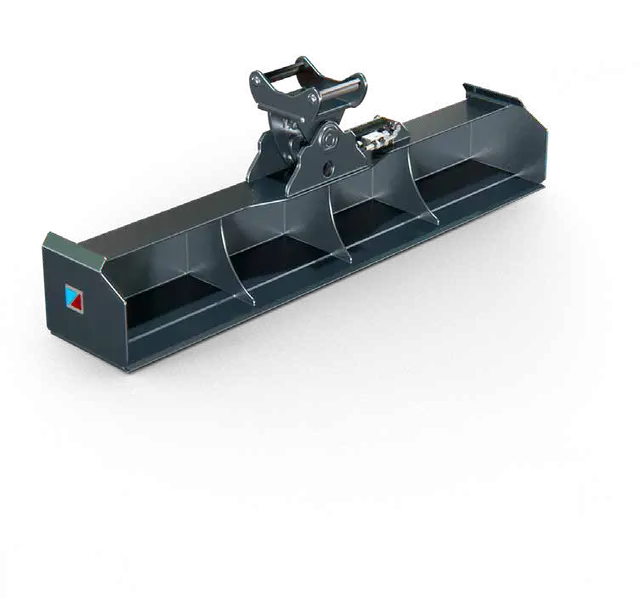
GRB light - mini-excavator grading beam with lowered mass
A grading beam for mini excavators from 0.6 to 7.0 t. It levels the ground for driveways, roads and building pads.
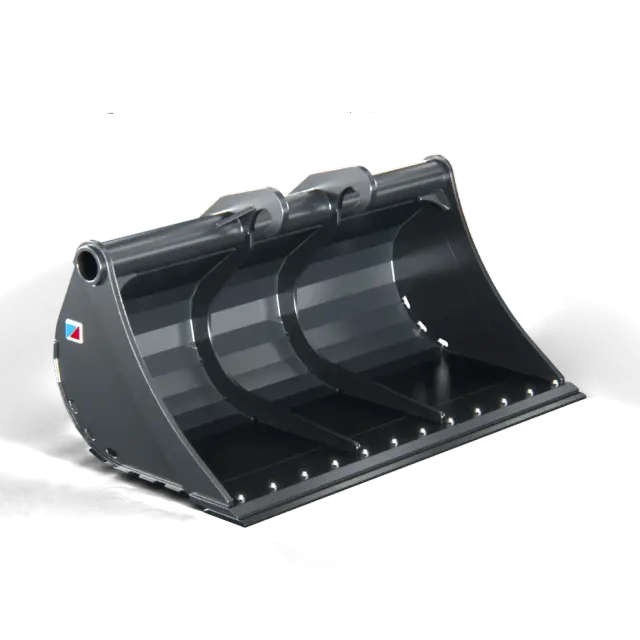
SB Dutch profile grading & ditching bucket
The Dutch profile has a wider opening, so sticky soil falls out. Use it for grading and ditch work in sticky soil.
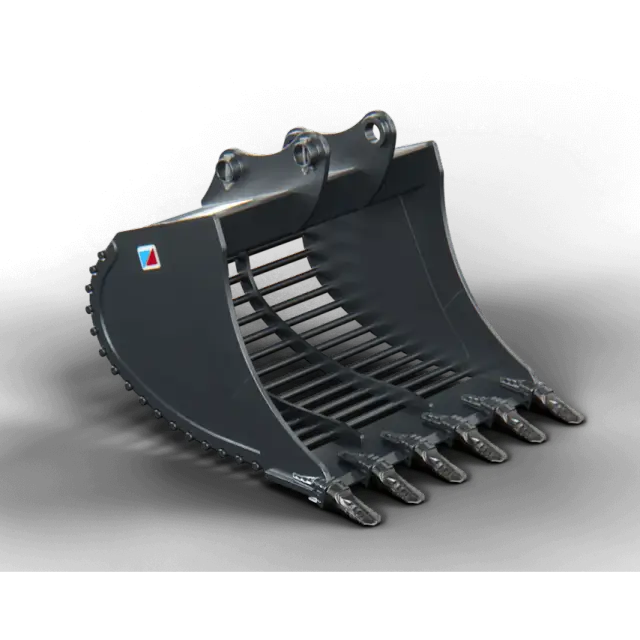
RDBF Flat-top skeleton DBF bucket on rods
Interlocking steel rods replace the solid bottom, C45 as standard and Hardox® as an option. Soil sifts out from the rocks while you dig trenches, drains and pipe bedding.
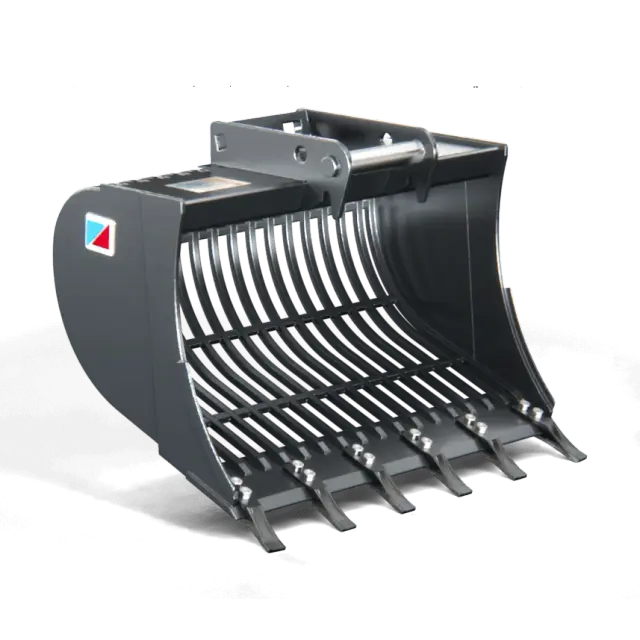
SGP Heavy duty skeleton GP bucket
Built on the GP bucket, with a bottom of S355 steel ribs instead of a closed plate. Fine soil and water fall through, and stones, roots and rubble stay in the bucket.
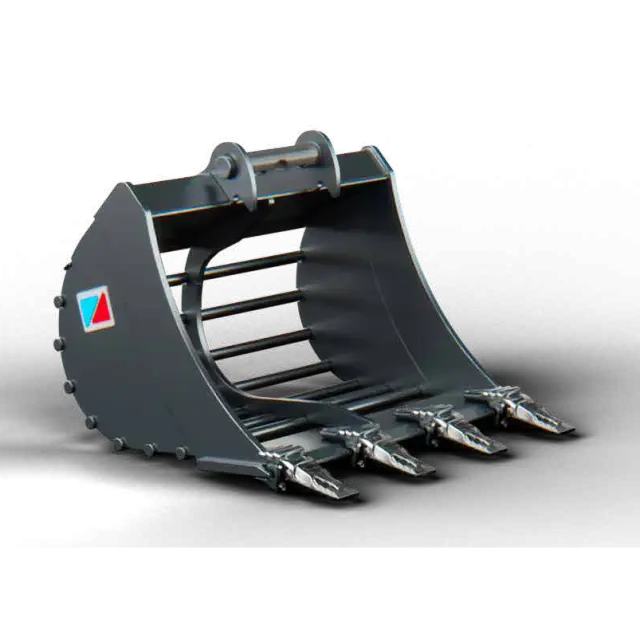
RGPL Skeleton rod GPL bucket
Built on the GPL bucket, with a bent top section for digging and a recessed bracket as an option. A mini-excavator separates material and cleans up with it.
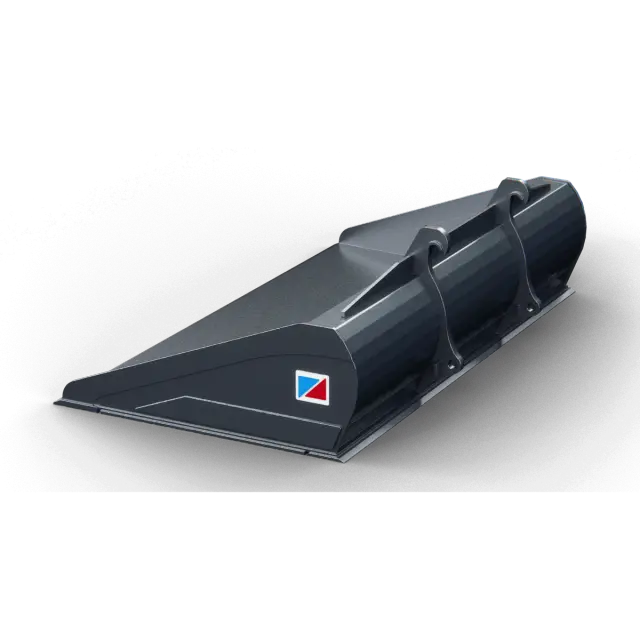
FLB Levelling bucket for front loader
Wide, low levelling bucket for a front loader, made for fine grading.
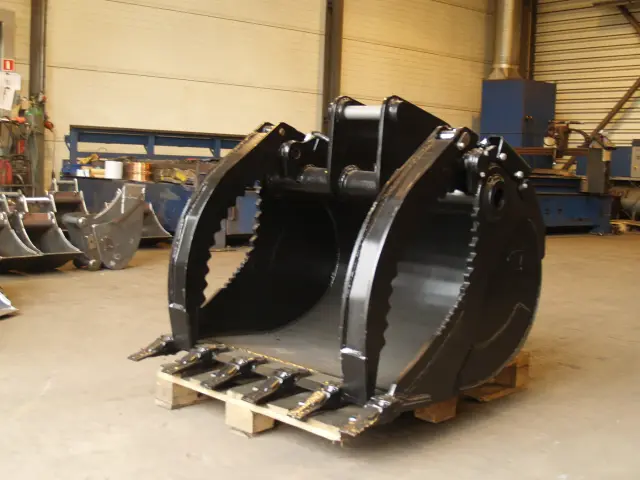
CB Heavy duty hydraulic clamp bucket
A hydraulic clamp arm closes onto the load, and a double pilot check valve holds it shut if a hose fails. The excavator digs, then picks up rubble, stumps, pipes and awkward stone.
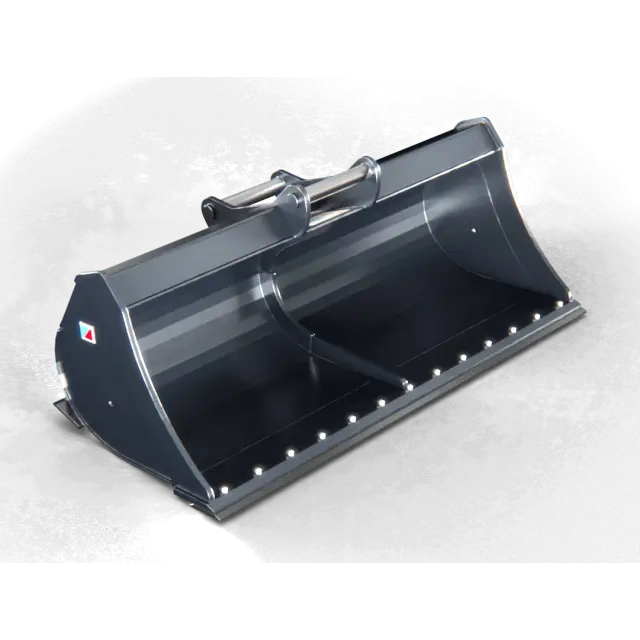
DCB Grading & ditching bucket with round profile
The round profile lets material flow out with little drag. Use it to grade surfaces and to dig and clean ditches.
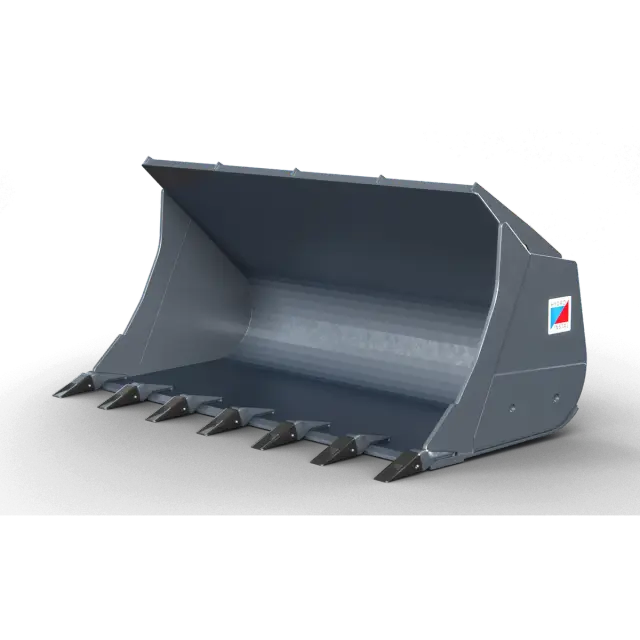
FGP General purpose loader bucket
General purpose bucket for a front loader, for loading, unloading and stockpiling loose material.
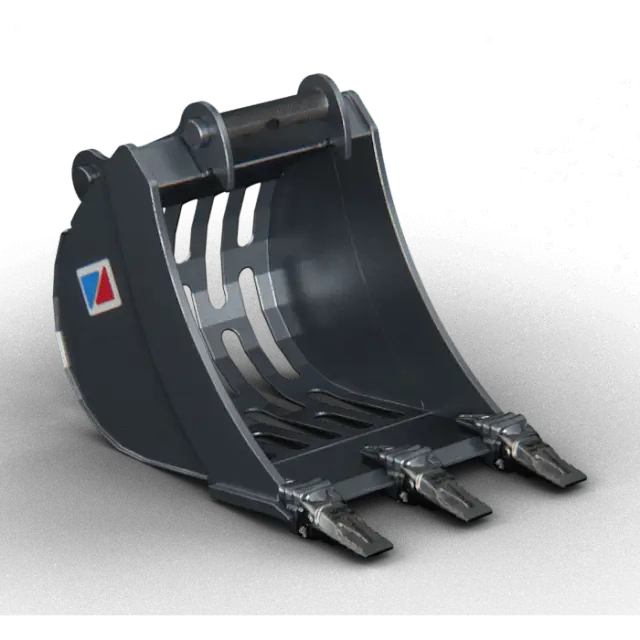
GPLO GPL bucket with perforated bottom
The bottom plate has holes cut in it, so fine soil, sand and water fall through while stones and roots stay in. You dig and screen in the same pass.
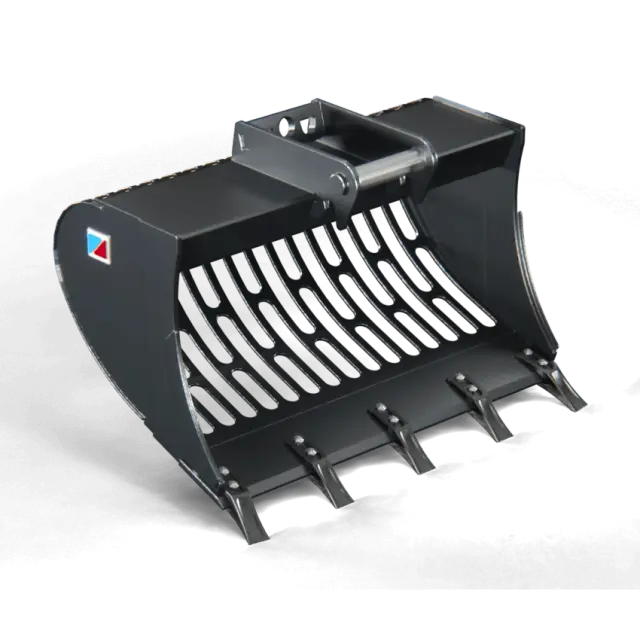
GPO GP bucket with perforated bottom
Holes cut in the bottom let soil fall through while stones stay in the bucket. A mini or midi excavator sorts stone from soil as it digs.
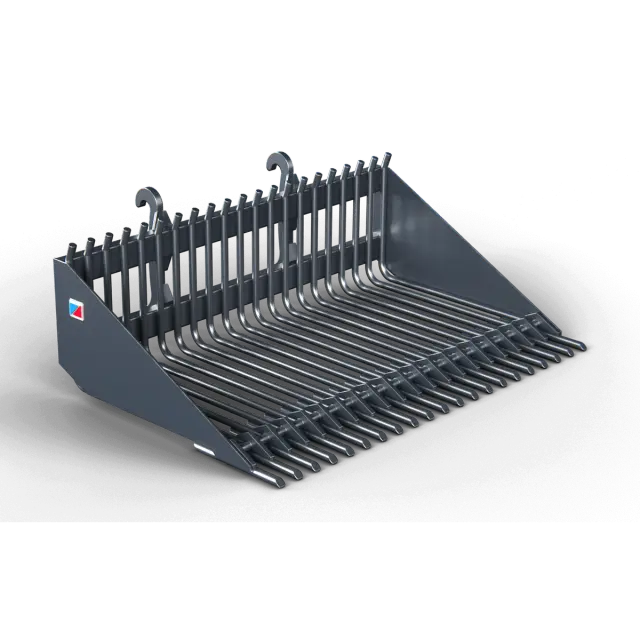
LSF Loader stone forks
Stone forks for a wheel loader, to pick up and carry rocks and other heavy material.
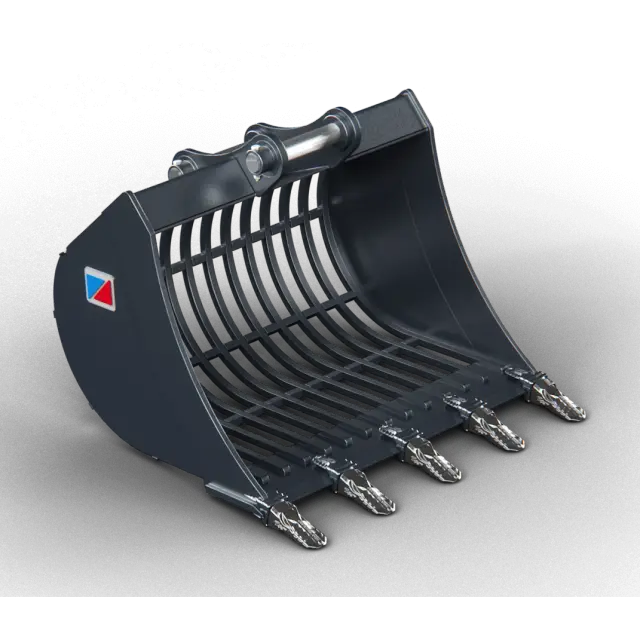
SGPL Heavy duty skeleton GPL bucket for mini-excavator
Built on the GPL bucket, with S355 steel ribs in the bottom instead of a closed plate. A mini or midi excavator separates fine soil and water from stones, roots and rubble in the same pass.
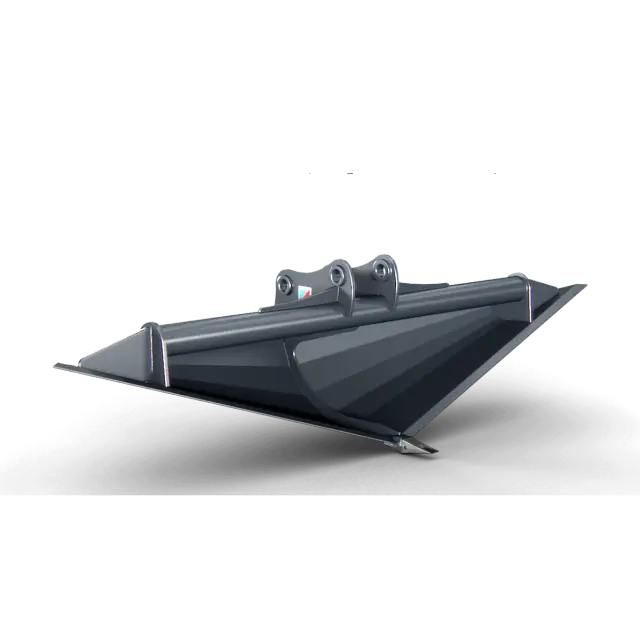
VB V-shape digging bucket
The bucket angle is made to your slope. It cuts a V-shaped ditch or slope in one pass for drainage channels, swales and road shoulders.


Alternatives
These families also name this work in their own description, but they are another tool type or are made for another machine.
- AC - excavator asphalt cutters
- BDP mini - clay digging bucket for mini-excavator
- CB mini - hydraulic clamp bucket for mini-excavator
- DS mini - Scandinavian deep digging bucket for mini-excavator
- GP - general purpose digging bucket
- GPL - general purpose digging bucket
- RIP mini - ripper shank for mini-excavator
Ask for an engineering review first
Our catalogue data does not decide these cases. Send us the machine and the job before you order.
- Your machine weighs more than 50 t, the top of the weight ranges on this page.
- You want a hydraulic family (CB, GBH, GBPH, and GDH) and do not know the oil flow and pressure of your machine's auxiliary circuit.
- Your quick coupler or pin size is not listed on the family page.
How to choose
Work through these questions in order, from the first dig to the finished surface and the machine.
- 1
What ground are you digging in?
For garden beds, paths and footings in loose earth, sand, gravel and firm clay, start with a general purpose bucket on a mini or midi excavator: the GP with a flat top, or the GPL. In sticky clay and wet ground, the BDP mini has a narrow Dutch profile made for that soil. Where large stones and boulders come up, the DS mini has a longer bottom and a larger tip radius, so it digs deeper in one pass and keeps the stones in the bucket.
- 2
Do you keep the soil and lose the stones?
A bucket with an open bottom sorts while it digs. On the GPO and the GPLO, holes cut in the bottom plate let fine soil, sand and water fall through, and stones, roots and debris stay in the bucket. The SGP and the SGPL have S355 steel ribs in place of the bottom plate. The RGPL has steel rods and no bottom plate, so it is lighter at long reach, and it also turns compost and prepares garden beds. On excavators from 10 to 50 t, the RDBF sifts soil from rocks on interlocking steel rods.
- 3
Are there roots, stumps or large stones to move?
The RIP mini opens compacted clay and stony fill, and the same shank pulls roots. A clamp bucket digs and then holds what a plain bucket drops. The CB mini picks up a root, a kerbstone or a pipe, and a double pilot check valve holds the load if hydraulic pressure drops, until you set it down. The CB does the same with stumps and awkward stone on excavators from 10 to 26 t. On a wheel loader, the LSF stone forks carry large stones and boulders, and earth and gravel fall through between the rods.
- 4
Is the ground level, or does it slope?
On level ground and simple slopes, a rigid grading bucket has no tilt joint, so the cutting edge stays fixed to the machine: GD on excavators, GB or GBP on mini and midi excavators. On uneven ground and banks, a tilting bucket sets its angle hydraulically without moving the machine. The GDH tilts ±45°, the GBH and the GBPH up to 45 degrees to each side, and on all three pilot check valves hold the angle. In sticky clay, the SB has a Dutch profile with a wider opening, so the soil falls out when the bucket is emptied.
- 5
How flat does the finished surface have to be?
A grading beam holds a flatter surface than a grading bucket. It is wide and flat, so the edge stays in view across the working width. On mini excavators, the GRB light comes as the standard GRB-MIKRO or the hydraulic GRBH-MIKRO. On larger excavators, the Standard GRB carries a roller, and the hydraulic GRB tilts up to 45 degrees to each side. The GRB and the PS grading bucket both work behind a tiltrotator. With a loader, the FLB is wide and low and leaves an even surface in few passes.
- 6
Which machine carries it?
Match the tool to the machine. On mini and midi excavators: GP-10 to GP-95, GPL-10 to GPL-95, GB-10 to GB-90, GBP-10 to GBP-95 and GBH-10 to GBH-90 from 0.6 to 10 t, GBPH-20 to GBPH-95, GPO-20 to GPO-95, SGP-20 to SGP-95 and SGPL-20 to SGPL-95 from 1.2 to 10 t, GRB light from 0.6 to 7 t. On excavators: GRB midi from 6 to 18 t and GRB maxi from 10 to 30 t, GDH-120 to GDH-400 from 10 to 40 t, GD-160 to GD-400 and SB-160 to SB-400 from 12 to 40 t, PS-160 to PS-300 from 12 to 30 t, RDBF-120 to RDBF-500 from 10 to 50 t. On loaders: FLB from 2 to 20 t, LSF-60 to LSF-160 from 2 to 16 t.
Attachments by job
For grading, decide how the tool has to meet the ground.
Level ground and simple slopes
A rigid grading bucket is enough here. GD on an excavator, GB or GBP on a mini or midi excavator.
Slopes and uneven ground
A hydraulic tilting bucket sets the angle without moving the machine. GDH on an excavator, GBH or GBPH on a mini or midi excavator.
The excavator runs a tiltrotator
The PS universal grading bucket and the GRB grading beam both work on a tiltrotator.
A wide, flat surface
A grading beam holds a flatter surface than a grading bucket, because the long blade rides on the ground. GRB on an excavator, GRB light on a mini excavator.
Sticky clay
The SB has a Dutch profile with a wider opening, so sticky soil falls out when the bucket is emptied.
Soil with stones in it
A riddle bucket lets the soil fall through and keeps the stones. RDBF on an excavator, SGP or RGPL on a mini excavator.
Fine grading with a loader
The FLB is wide and low, so it leaves an even surface in few passes.
Need a price for Landscaping attachments?
Tell us the machine and the attachment you need. We usually reply within 1 working day.